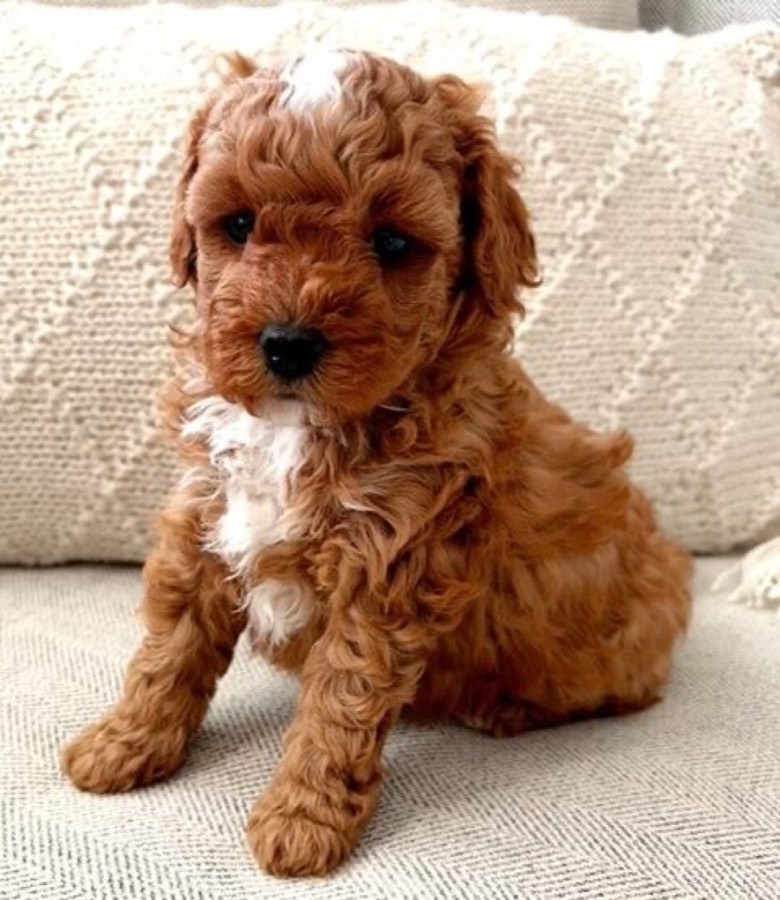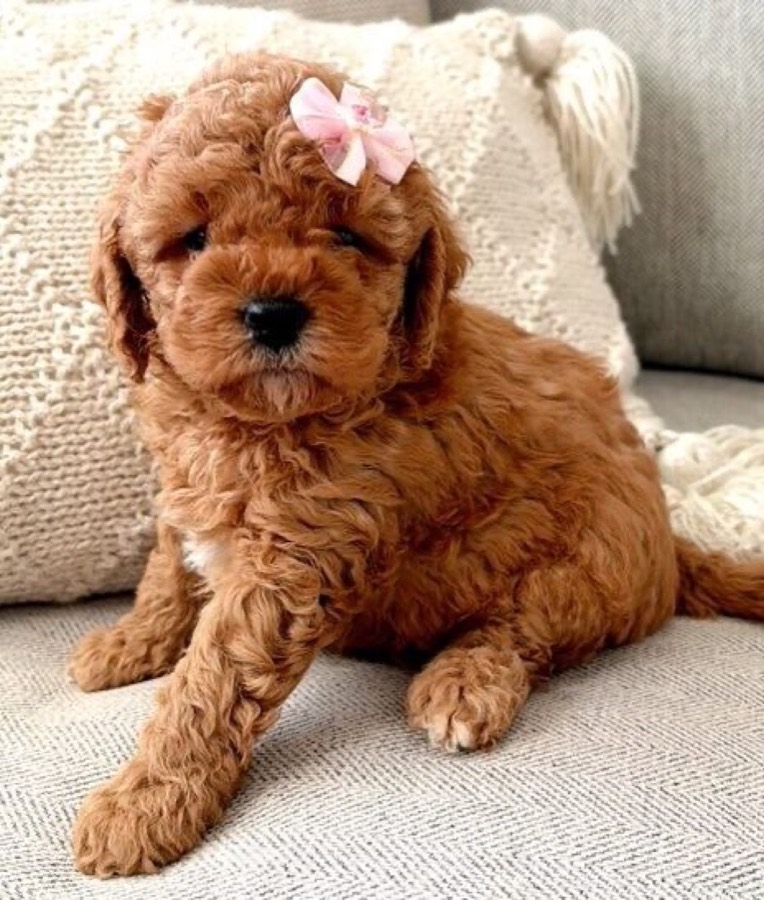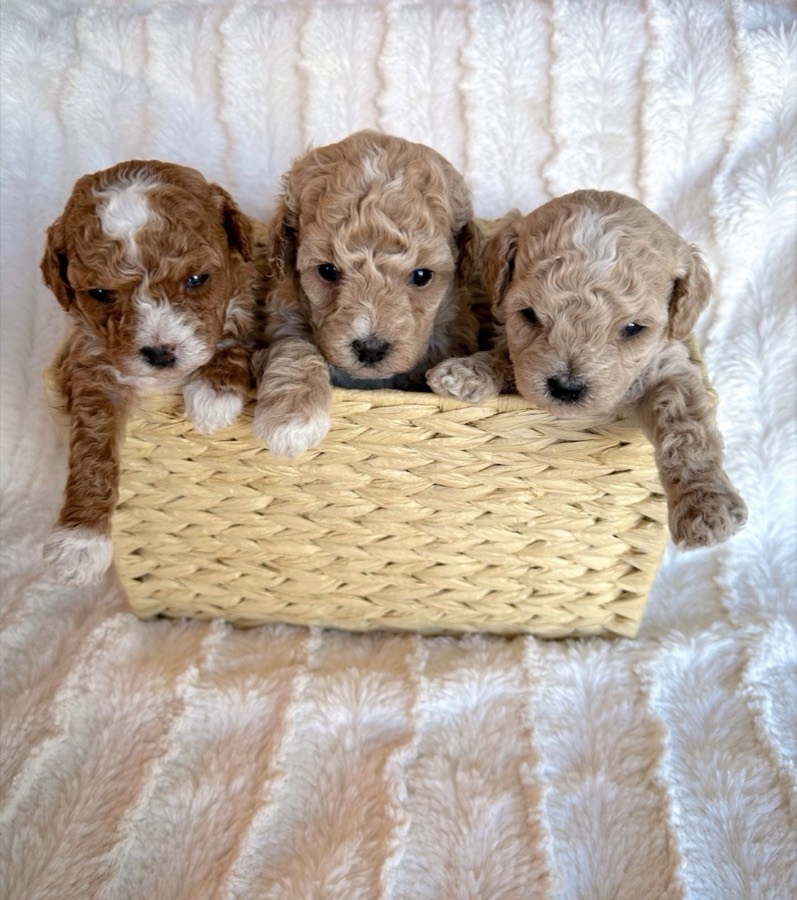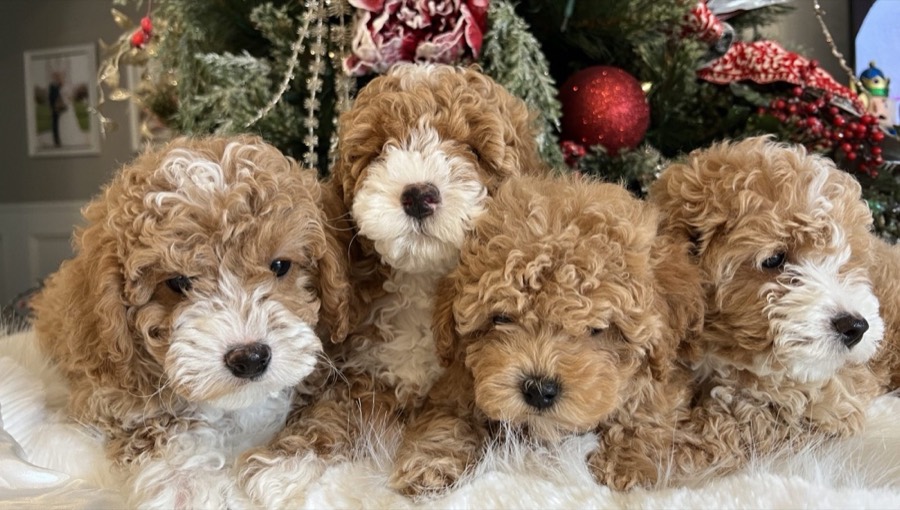
Potty training is the first big project with a new puppy, and tiny dogs have their own challenges. Small bladders, quick bursts of energy and short attention spans mean you need patience and a plan. Here is the approach I share with Skyridge families.
Start with realistic expectations
A micro or petite Goldendoodle has a very small bladder, so it needs to go out often. Most puppies are mostly reliable by four to six months, though accidents can continue longer, especially in tiny dogs. That is normal. Consistency matters more than speed.
Our puppies are not fully potty trained when they leave. At eight weeks, they are babies. We start crate training before they leave, so your puppy understands that a crate is a cozy space, which makes the rest easier.
The golden rules
- Take the puppy out often. Every hour or two when awake, and right after waking, eating, drinking and playing.
- Use the same spot. The smell tells the puppy this is the place.
- Go with the puppy. Stay outside, so you can reward on the spot.
- Reward immediately. Praise and a tiny treat within seconds of finishing.
- Keep a schedule. Regular meals lead to regular potty times.
- Supervise indoors. Keep an eye on the puppy or use a crate, playpen or leash.
A sample schedule
A very young puppy might follow a routine like this:
- First thing in the morning: out to potty
- Breakfast, then out again within 10 to 20 minutes
- Play, then out
- Nap in the crate, then out as soon as the puppy wakes
- Lunch, out
- More play, nap, out
- Dinner, out
- Last potty right before bed
- One or two night trips for the first weeks
Adjust based on your puppy's age and your vet's advice about water and feeding.
Using the crate
A crate helps because dogs usually avoid soiling their sleeping area. Use a crate sized for a small dog, with enough space to stand and turn but not enough to use a corner as a bathroom. Never leave a puppy crated longer than it can hold its bladder, and never use the crate as punishment. See our guide on crate training and the first night.
Watch for signs
Puppies often signal that they need to go. Look for:
- Sniffing the floor in circles
- Whining or pacing
- Heading to a corner
- Sudden stopping in the middle of play
If you see any of these, calmly take your puppy out right away.
Handling accidents
Accidents will happen. When they do:
- Do not scold or rub the puppy's nose in it. This only teaches fear.
- Interrupt gently if you catch the puppy in the act and take the puppy outside.
- Clean with an enzyme cleaner to remove the smell.
- Think about what you can change, such as more frequent trips.
Potty pads or outdoors?
Some owners of tiny dogs use pads, especially in apartments, in bad weather or for puppies that cannot go outside yet. Pads can work, but switching later requires extra training. If you want your dog to go outside eventually, start outdoors as soon as your vet says it is safe, and use a pad only as a backup.
Cold weather and tiny dogs
In winter, small dogs can resist going out in the cold. Dress your puppy in a warm coat, clear a small potty area and go out with your puppy so it is a quick, rewarding trip. In Utah winters we plan for this too.
Common problems
- Peeing when excited: this is common in puppies and usually improves with age. Keep greetings calm.
- Going right after coming inside: puppies may be distracted outside. Stay outside until they go, then give a short playtime as a reward.
- Regression: a puppy may slip after a move or change in routine. Go back to basics.
- Marking: talk to your vet or trainer if it continues.
When to ask for help
Call your vet if your puppy suddenly has many accidents, strains to pee, has blood in urine or seems to be in pain, as these can be signs of a medical problem. We are also happy to answer questions for the life of your dog.
More resources
- Prepare your home for a puppy
- Our FAQ
- Available puppies
- Contact Michelle or call 801-369-3960
When you are ready, apply for a puppy. With a plan and patience, your Goldendoodle will learn quickly, and the work you do now will pay off for many years.
A few encouraging reminders
Potty training can feel slow, but progress is rarely a straight line. Some days will be perfect and others will include accidents, especially during growth spurts or changes in routine. Celebrate small wins, stay calm and keep your schedule steady. Most puppies catch on faster than their owners expect, and every successful trip outside builds the habit. If you feel stuck, call us, because we are always glad to help.
Ready to meet your puppy?
See who is available, or call Michelle at 801-369-3960 with your questions.
See available puppiesApply for a puppyContact us